Packaging cost savings
Same product. Same protection. Lower cost.
Packaging costs you three ways: the material, the labor to pack it, and the freight to ship it. We find money in all three. Most of what we change, your customer never sees.
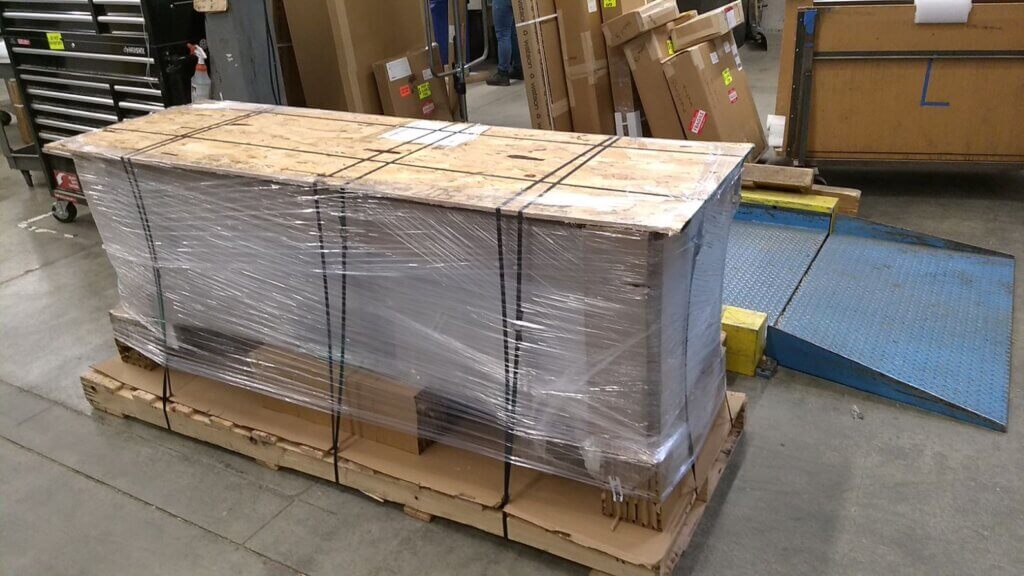
Packaging costs you three ways: the material, the labor to pack it, and the freight to ship it. We find money in all three. Most of what we change, your customer never sees.
Most people only look at the price of the box. That's one third of the cost.

What the box, bag, film, and label cost to buy. Often the wrong grade, the wrong size, or more parts than the job needs.

What it costs in time to pack it. Every extra fold, tape strip, and hand step is money, and it repeats on every single order.

What it costs to move it. Carriers charge for size as well as weight, so a half-empty box costs real money on every shipment.
Four steps. Start at the beginning, or jump in where you already are.
Plenty of people land here with the problem already named: a box that's too big, a line that's too slow, a price that jumped last quarter. Tell us what it is and we can start at step 3.
You know the number is too high, but not where it's coming from. That's exactly what step 2 is for. We look across your packaging, your process, and your freight, and tell you where the money actually is.

Tell us what you ship and roughly what you spend on packaging. We tell you whether there's likely money here, about how much, and which step you should start at.

We analyze your current packaging, how you pack it, and how it moves through your supply chain. Then we rank the best opportunities and put a size on each one. You see how much is on the table before you commit to anything.

We take the packaging apart piece by piece and put a cost on every layer. Then our engineers redesign it. You get three to five real options, each with the price difference next to it.

We test the new design to be sure it still protects the product. We build the financial case so finance can sign off. Then we write the specs, get supplier quotes, and help you make the switch without stopping your shipping.
Where your money is going across material, labor, and freight, with every opportunity ranked and sized. You find out what is worth chasing and what isn't.
Three to five real alternatives with a price on each one, so you're choosing between numbers instead of guessing.
Tested designs, approved specs, supplier quotes, and the switchover done. Savings that show up in what you actually pay, not just in a report.

A cheaper box that ships worse or takes longer to pack isn't cheaper. We add up all three costs before we call something a saving.

We are engineers, not a supplier or a broker. We make nothing on what you buy, so the cheapest honest answer is the one we give you.

You see a real number in a week, for a small fixed fee, before anyone asks you for a big commitment. If the number isn't good, you stop.
Not unless you want it to. Most of the savings are in things your customer never sees: the grade of board, how it stacks on a pallet, how many separate parts there are. We flag anything that would change the look before we recommend it.
A list of your packaging items, twelve months of what you spent, your current supplier prices, and freight information if you have it. If you're missing some of that, we work with what you have and tell you how it affects the accuracy.
No. The biggest savings usually come from changing the design, not the vendor. If a supplier is genuinely overcharging, we'll show you the proof and let you decide.
It depends mostly on how long it's been since anyone looked. We give you an honest range after the first week, with a confidence level attached, so you can decide whether it's worth going further.
Yes. Brokers work on price. We work on design, spec, and how the package moves — which is where most of the money is hiding. The two don't conflict.
Usually the opposite. Less material and less wasted space means less to buy and less to ship. When there's a real trade-off, we put both numbers in front of you.
Tell us what you ship and what you spend. We'll tell you whether there's real money here and where it's most likely hiding.