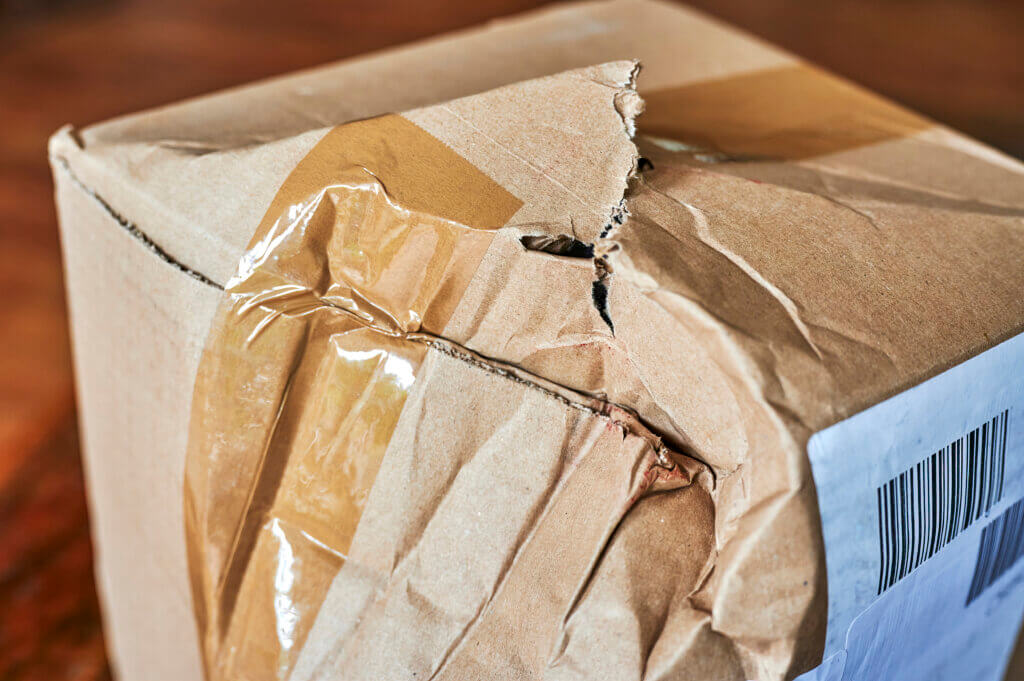
When a shipment shows up broken, you pay for the product, the freight, the rush replacement, and the phone call. We complete boots-on-the-ground root cause analysis to find out how it’s breaking, then redesign the package and validate the solution. BoldtSmith Packaging does not sell packaging, we solve problems. Our 19 packaging engineers on staff tackle problems big and small.


Our project went very well right from the beginning. The project itself required a lot of attention to detail due to the packaging and protection requirements that were necessary. I worked with Max from their team and he did a fantastic job executing on all levels. All of the work was done in a timely, professional and satisfactory manner. I would highly recommend their design and consulting services!

Our organization needed to reduce quality complaints due to shipping. Great staff and were easy to work with, very diligent with on time task completion! Very agreeable team, efficient and knowledgeable. 10-10 recommend!

Our goal was to get from failing ISTA 3 to passing ISTA 6A. The proposed package does that and is more compact. What was to be only a packaging improvement has become a huge DTV for us due to the 25% more per pallet. Some of the M-Can production is moving to our Mexico facility. The shipping savings will be in the 100’s of thousands.
Most companies count the broken product and stop there. That's the small part.
Four steps. We measure first, then we fix.
Tell us what breaks, where it breaks, and how often. We tell you whether we can help. Sometimes the answer is no, and we'll say so.
We hit the field to complete root cause analysis on your shipping damage.
Our engineers redesign the package around the hazards we found, not around guesses. More protection where the risk is real. Less material where it isn't. You get more than one concept to choose from.
We build prototypes and put them through transit testing: drops, vibration, and compression. You see proof the design holds up before you spend a dollar on a production run.
It's a standard lab test that copies what a package goes through on a truck: drops, vibration, and the weight of everything stacked on top. If your package survives the test, it survives the trip. It costs far less to fail in a lab than in your customer's warehouse.
What damage is costing you each year, a map of your supply chain with every hazard type marked, and the likely causes ranked.
More than one way to solve it, with the trade-offs written out. You choose the direction instead of being handed a single answer.
The final design, the test results that prove it survives your lanes, and drawings any supplier can quote from. We don't sell packaging, so you take them wherever you like.
Damage is an engineering problem, not a purchasing one. We work in materials, structures, and transit hazards every day. That's how we find the real cause instead of telling you to add more foam.
Most reviews look at a package sitting on a desk. We follow your product through packing, storage, handling, and every leg of the shipment. The damage is usually happening somewhere nobody was looking.
Prototypes and transit testing mean you don't fund a production run to find out whether the new design works. You see the results first.
We are consultants. We earn nothing on what you buy, so we have no reason to recommend more material than your product needs. The drawings are yours to quote anywhere.
Yes, and most companies don't. We rebuild the number from claims, credit memos, returns, and customer complaints. You'd be surprised how much of the picture is already sitting in your accounting system.
You get a real cost number and your hazard map in about two weeks. Redesign and testing take another four to eight weeks, then normal production lead time. Most of that is testing, and that's the part worth waiting for.
Sometimes a little more material. Often less, because right-sizing cuts material and freight at the same time. We show you both numbers before you decide anything.
No. We are engineers, not a supplier. The drawings are yours and you quote them wherever you like. It also means we have no reason to recommend more material than your product needs.
No. Pallet and freight damage is often bigger and less visible than parcel damage. If you ship on pallets, that's usually where we start.
Partly. Carriers are rough and always will be, so the reliable fix is a package that survives them. We also help you document damage well enough that claims stop getting denied.
Tell us what you ship and where it's breaking. We'll tell you whether there's a real problem here, roughly what it's worth, and what to do first.